

Facts about Singapore
Singapore is a small island country in Southeast Asia. Even though it is small, it is one of the most modern and developed countries in the world. Singapore is known for being very clean, safe, and organized.
Singapore has four official languages: English, Malay, Mandarin Chinese, and Tamil. People from many different cultures and religions live there. This makes Singapore famous for its variety of food, festivals, and traditions.
One of Singapore’s most famous landmarks is Marina Bay Sands, a hotel with three towers and a large rooftop area. Another popular attraction is Gardens by the Bay, which is known for its huge futuristic “Supertrees.” Singapore is also called the “Garden City” because it has many parks, trees, and green spaces.
An interesting fact is that Singapore became an independent country in 1965. Since then, it has developed into an important international center for business, trade, technology, and tourism. Although Singapore is one of the smallest countries in the world, it has a population of around six million people.
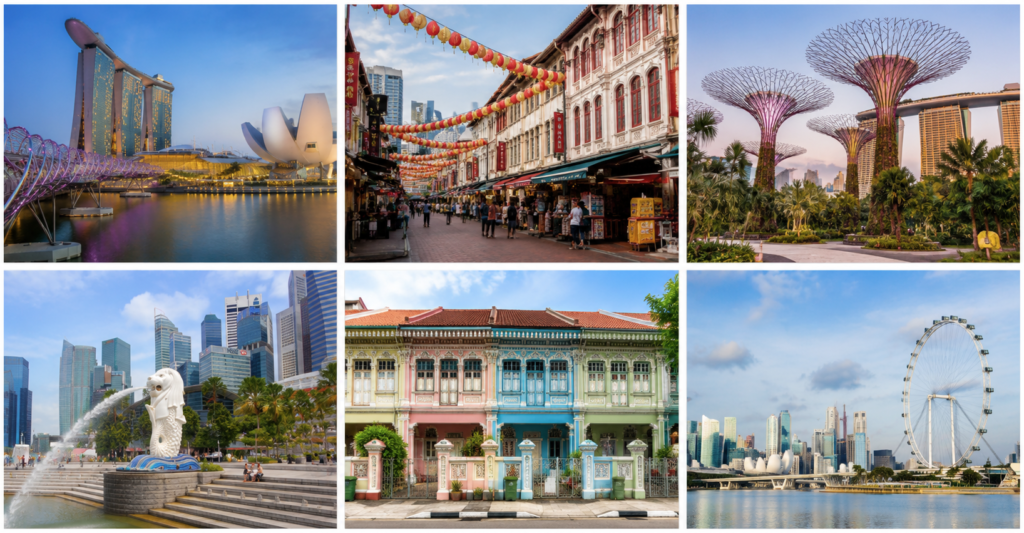
The City of Singapore
Singapore is a modern island city-state in Southeast Asia, located just off the southern tip of the Malay Peninsula. Founded as a British trading post in 1819 and becoming an independent nation in 1965, Singapore has grown into one of the world’s leading centres for finance, trade, technology and tourism. The city combines striking modern architecture with historic neighbourhoods such as Chinatown, Little India and Kampong Glam. Famous landmarks include Marina Bay Sands, the Merlion, Gardens by the Bay and the Singapore Flyer, while green parks and waterfront promenades give the city a distinctive balance between urban life and nature.
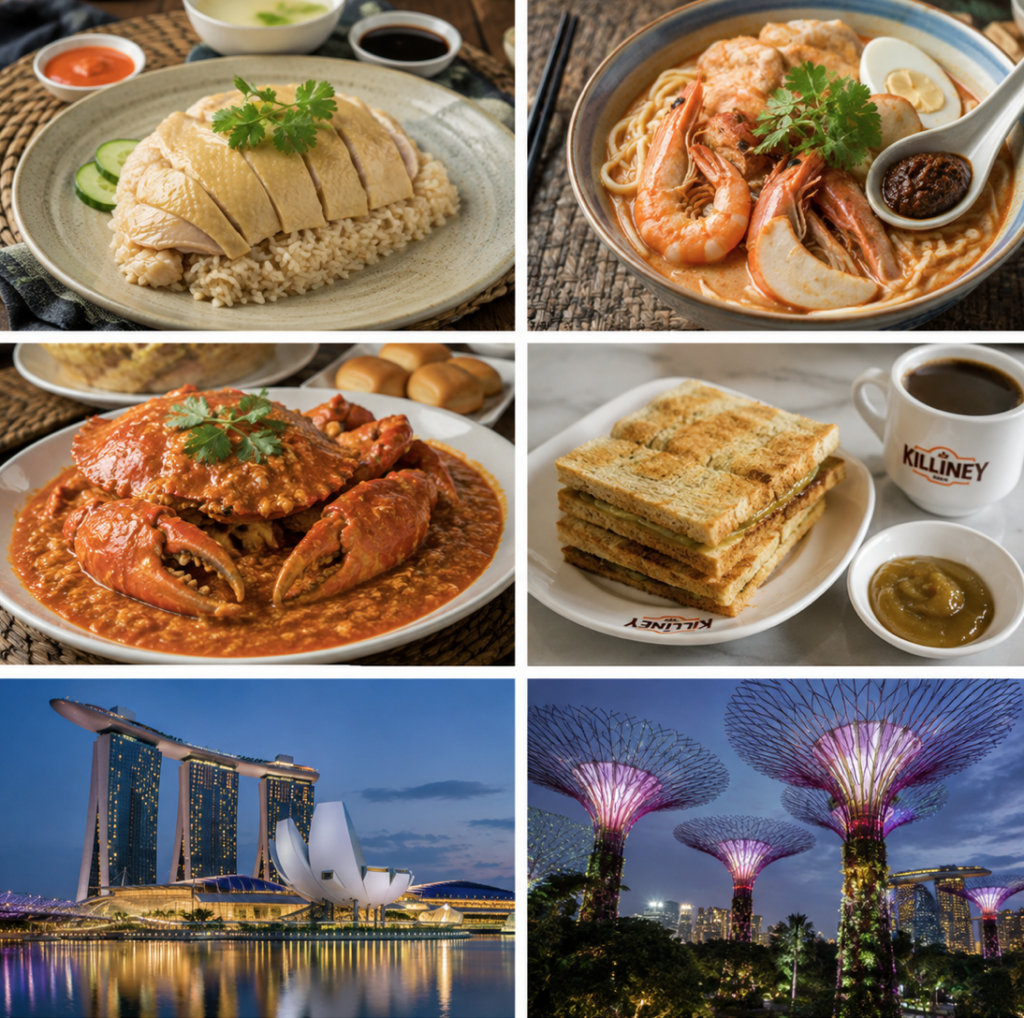
Gastronomy
Singapore is famous for its diverse food culture, shaped by Chinese, Malay, Indian and Peranakan influences. Hawker centres are an important part of everyday life and offer a wide range of affordable local dishes. Popular foods include Hainanese chicken rice, laksa, satay, chilli crab and kaya toast. Visitors can explore well-known food centres such as Lau Pa Sat, Maxwell Food Centre and Newton Food Centre, where many different flavours and traditions can be experienced in one place.
Weather in the City
Singapore has a tropical climate, meaning it is warm and humid throughout the year. Daytime temperatures are usually around 30–32°C (86–90°F), while evenings remain warm at around 24–26°C (75–79°F). Short but heavy rain showers are common, especially during the monsoon seasons, although sunshine can return quickly afterwards. Light, breathable clothing, sunscreen and an umbrella are useful for visitors spending time outdoors.
Things to do
Singapore offers a wide variety of experiences, from futuristic architecture and tropical gardens to historic neighbourhoods, museums and waterfront attractions. Despite its compact size, the city has plenty to explore and is easy to travel around using its efficient public transport system.
- Marina Bay — one of Singapore’s most recognisable areas, featuring Marina Bay Sands, the waterfront promenade and spectacular views of the skyline.
- Gardens by the Bay — a large futuristic garden famous for its Supertree Grove, Cloud Forest and Flower Dome.
- Chinatown — a lively historic district filled with traditional shophouses, temples, markets and restaurants.
- Little India — a colourful neighbourhood known for its temples, shops, street art and Indian food.
- Kampong Glam — Singapore’s historic Malay-Arab quarter, home to the Sultan Mosque and the cafés and boutiques of Haji Lane.
- Sentosa Island — a popular leisure destination with beaches, attractions, resorts and entertainment.
- Singapore Botanic Gardens — a UNESCO World Heritage Site featuring tropical plants, peaceful walking paths and the National Orchid Garden.
- Singapore Zoo & Night Safari — popular wildlife attractions known for spacious naturalistic habitats and the opportunity to see nocturnal animals after dark.